A Long-Lived
Digital Platform
From OT connectivity at the edge to AI-driven orchestration at the top. Built protocol-agnostic, deployed anywhere, extensible to any domain.
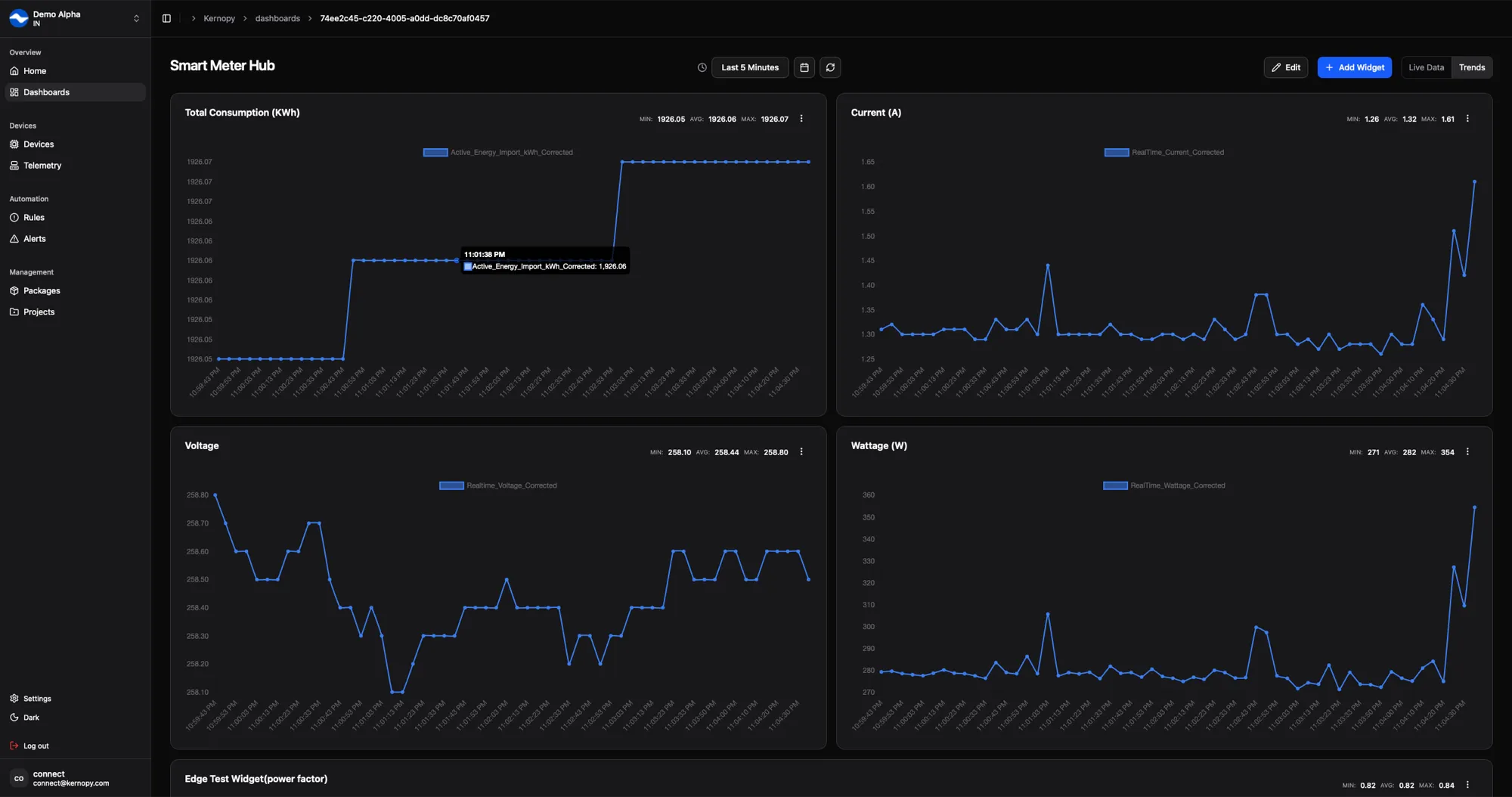
Architecture
Every Data Point Follows a Deterministic Path.
From field device to application layer, with clear ownership, transformation, and access semantics at each boundary.
Capture Layer
Sensors, meters, PLCs — your existing physical equipment. Protocol gateways and data normalisation at the edge, close to the machine.
Validation Layer
Device registry, time-series historian, rules engine, alerting, and integration APIs. Clear ownership and transformation semantics at each boundary.
Orchestration Layer
Unified control plane, RBAC, organisation admin, and app access. Semantic layers built on the shared platform for every vertical.
Kernopy Console
One Control Plane.
Every Layer.
The unified shell where operators, engineers, and administrators manage everything under a single authenticated session.
Unified Registry
Every endpoint — sensors, meters, PLCs, and Edge Runtime nodes — visible in one place with live health status.
Zero-Touch Provisioning
Poll intervals, register maps, protocol parameters, and local rule expressions pushed remotely. Changes versioned automatically.
Governance & Audit
Organisation-wide identity and access management. All domain apps inherit the active session — no separate logins.

IoT Core
The Data Backbone
IoT Core sits between the physical edge and every application layer above.
Device & Edge Node Registry
Every endpoint — sensors, meters, PLCs, and Edge Runtime nodes — is registered as a typed device. Edge nodes are first-class devices: visible in the same registry, carrying live health and connectivity status, configurable remotely.
Edge Runtime Configuration
Poll intervals, register maps, protocol parameters, computed parameter scripts, and local rule expressions are pushed to Edge Runtime nodes through IoT Core. Changes are versioned. Nodes apply pending updates on reconnect.
Rules & Alerts
Expression-based rules run against any registered parameter. Latency-sensitive rules are pushed to Edge Runtime for local evaluation. Cross-device and cross-site rules run cloud-side. Alerts deliver via webhook, email, and in-app channels.
Data Pipeline & Historian
Telemetry arrives over MQTT from authenticated Edge Runtime nodes. IoT Core normalises payloads to a unified schema and routes time-series data into the historian. The typed parameter reference surface is what all domain applications query.
Cloud Orchestration
Console, domain apps, and AI-driven coordination across all sites.
IoT Core Services
Device registry, historian, rules engine, alerting, and integration APIs.
Edge Intelligence
Protocol gateways, local inference, edge logic, and data buffering.
Physical Assets
Sensors, meters, PLCs — your existing OT equipment stays untouched.
Full Stack
Edge to Orchestration.
One Platform.
The domain application layer is identical across all deployment modes. Deployment is an infrastructure decision, not a product limitation.
Deployment
Flexible Topologies
The domain application layer is identical across all three. Deployment mode is an infrastructure decision, not a product limitation.
Full On-Premise
Edge Runtime, IoT Core, and Console all run within the customer's network boundary. No cloud dependency. Suitable for air-gapped OT networks or strict data sovereignty requirements.
Hybrid
Edge Runtime runs on-site handling OT connectivity and local buffering. IoT Core, Console, and domain apps run cloud-hosted. Data crosses the boundary only as normalised, authenticated MQTT payloads over TLS.
Cloud Native
For environments where field devices already publish MQTT or expose REST APIs natively. No on-premise hardware required. Best suited for greenfield deployments or modern IT-managed OT infrastructure.
AI Infrastructure
Intelligence at Two Levels
Kernopy is built to support AI at both the system level and at the edge — not as a bolt-on, but as an infrastructure-native capability.
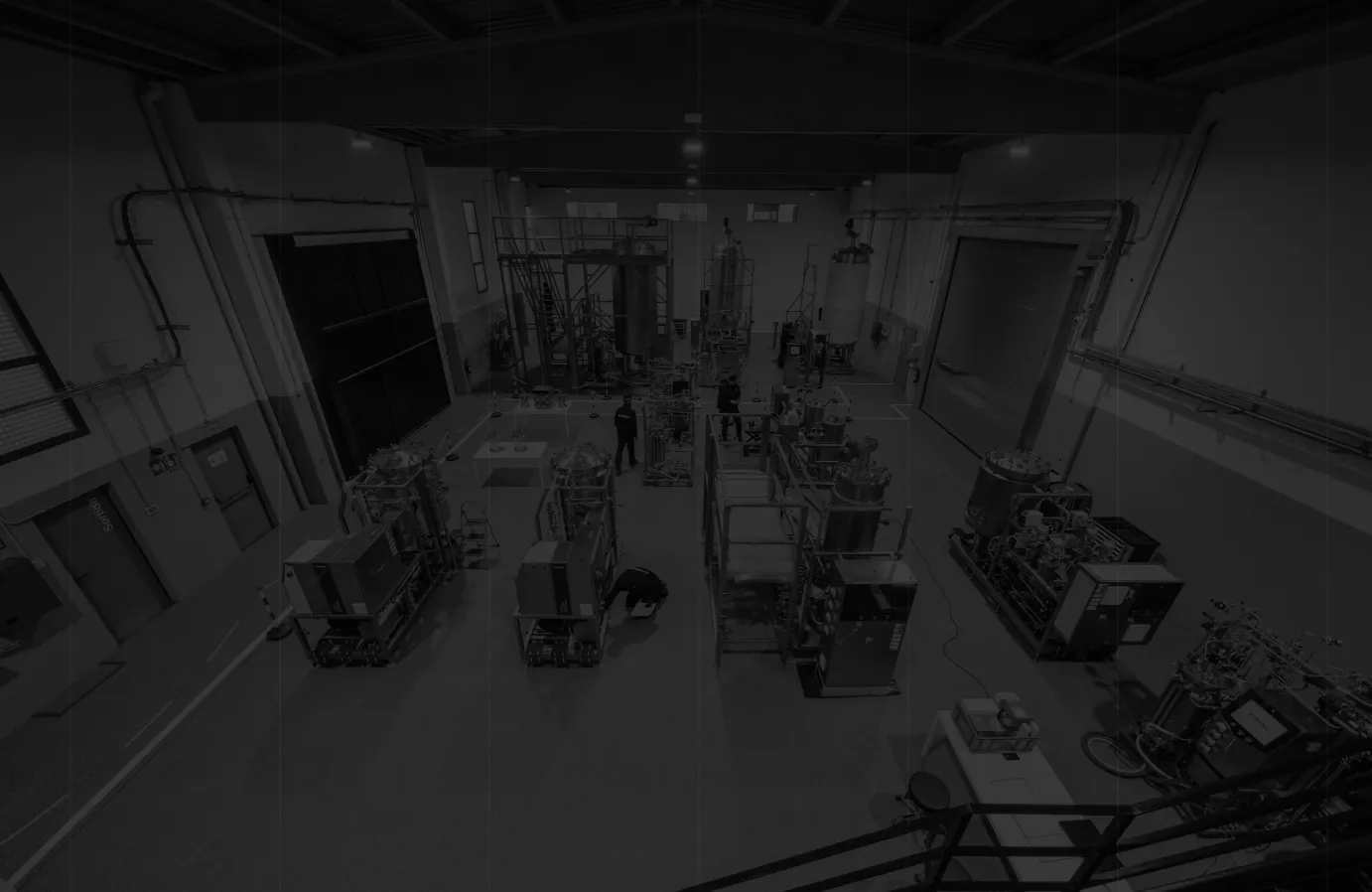
Agentic Systems
Agents operating at the system level can reason across sites, coordinate multi-step operational responses, and interact with external systems — with structured telemetry and domain context available without custom retrieval pipelines.

AI at the Edge
The Edge Runtime is designed to host smaller models directly on-site — no cloud round-trip required. Anomaly detection, signal classification, and threshold prediction run against live parameter streams with local inference.
Vertical Agnostic
One Platform.
ANY VERTICAL.
A long-lived digital backbone for physical systems. Protocol-agnostic, domain-extensible, and ready for the infrastructure you're building next.